Exhibition 大﨑のぶゆき展
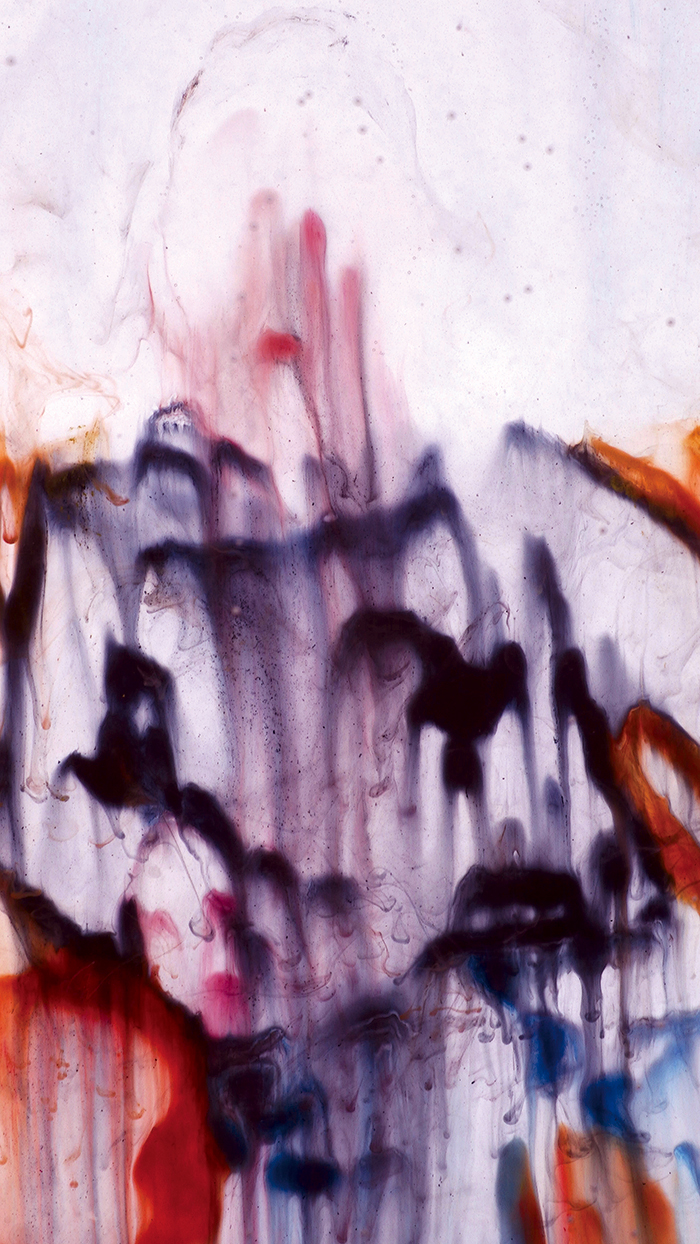
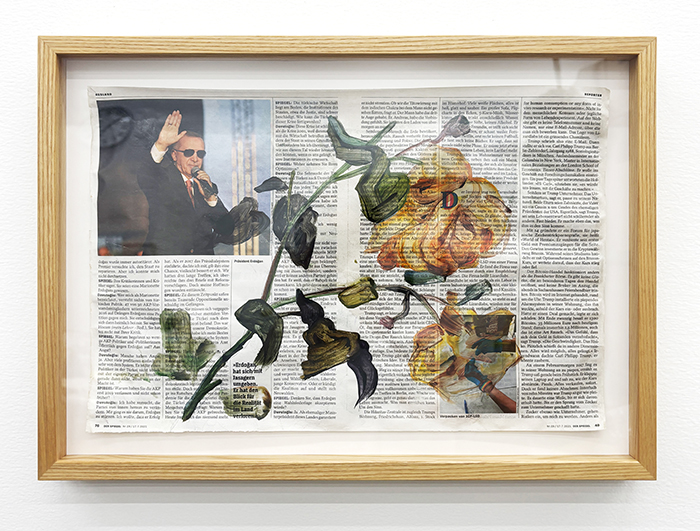
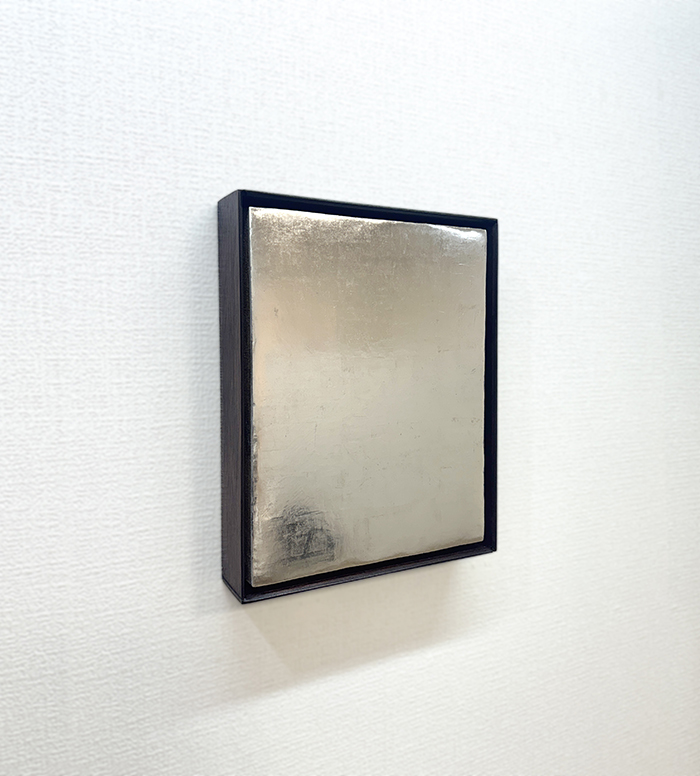
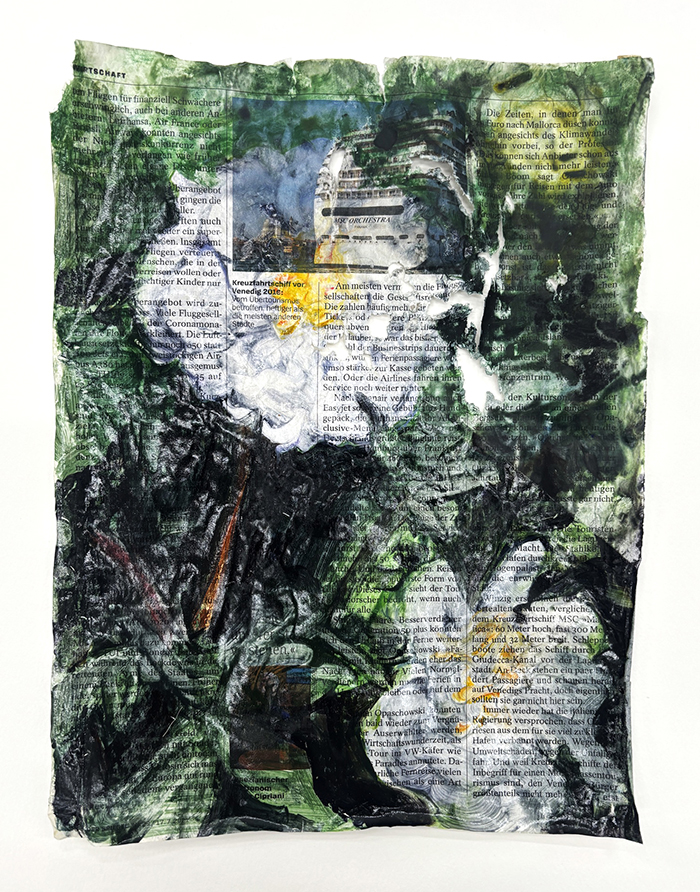
Self-Portrait(s), 2025–2026 『セルフ-ポートレイト(ツ)』 ここ数年、日時計のシリーズを制作しはじめて考えることは50年100年後の未来についてである。当たり前の様におそらくとてつもない医学進化が直近で起こらない限り、私は存在していない未来の世界だ。実は、私は長らくセルフポートレートを描こうとしてきた。しかし描くたびに、確かにするどころかその輪郭を曖昧にしていく。私はその度に距離を取ってきたのだが、改めて向き合うことにする。 この数年間に収集してきた雑誌や新聞の紙面の上に、自ら撮影した写真をもとにドローイングを重ねる。紙面には時代や世界の状況が堆積しいる層だ。その上に、私は私自身や記憶の像を一時的に置いてみる。モチーフに関係する緯度に応じた保存修復用の樹脂(パラロイド)を塗布したその物体は、水をかければ強固な保護膜以外のところは溶解し、何十年、何百年と時間が経てば薄い支持体は褪色して崩れていくだろう。 緯度は人の位置情報ではなく、身体を物質環境へと接続する条件である。また人の意思とは無関係に進行する時間や変化は、それぞれの輪郭が物質と時間の運動の中で別の状態へ移行していく新たな生成の現場だ。記録とは残すことではなく、選択し、操作することであり、また保存もまた中立ではない。鈍く反射し像を結ばないプラチナ箔の表面は、強固な素材とイコン的技法によって成立している。「ある」ことを描きながら「ない」ことを示し、見えないものを描きながら存在を示してきたこれまでの方法論の延長上に有る。鏡の名前を持つ雑誌と鏡を想起する絵画。 Self-Portrait(s) とは、「私」を描く形式を通して、私でない何か、また人とは別の何かへと移行する。その過程は、存在に固定された主体ではなく、流動する物質の一状態となるのだ。 <Self-Portrait(s)> Over the past several years, through the production of my Sundial series, I have been thinking about the world fifty or one hundred years into the future. Unless an extraordinary medical breakthrough occurs in the near term, it is a future in which I will no longer exist. For many years, I attempted to create self-portraits. Yet each time I drew one, the image did not affirm my presence; instead, it rendered me increasingly indistinct. I repeatedly distanced myself from these works. For various reasons, however, I have decided to confront this subject once again. On the surfaces of magazines and newspapers collected over the past several years, I layer drawings based on photographs I have taken myself. These printed pages already contain sedimented strata of their time and of the world’s events. Upon that accumulated surface, I temporarily place the image of myself and of memory. According to the latitude associated with each motif, I apply a conservation resin (Paraloid). When water is poured onto the surface, all areas except those protected by the hardened membrane dissolve. Over decades or centuries, the fragile support will fade and eventually disintegrate. Latitude here does not function as a marker of human location. Rather, it operates as a condition that connects the body to its material environment. Time and transformation—processes that proceed independently of human intention—are sites in which contours shift from one state to another within the movement of matter and duration. Recording is not simply the act of preservation; it is an act of selection and manipulation. Preservation, too, is never neutral. The surface of platinum leaf, dull in its reflection and incapable of forming a clear image, is constructed through durable materials and an icon-based technique. While depicting what “is,” it simultaneously indicates what “is not.” While rendering the invisible, it suggests presence. This approach extends my previous methodology. A magazine bearing the name Der Spiegel—“The Mirror”—and a painting that evokes the mirror. Through the format of self-portraiture, Self-Portrait(s) does not seek to fix the subject as a stable identity. Rather, it traces a transition—from “I” toward something other than myself, perhaps even toward something other than the human. In this process, the subject becomes not a fixed entity, but one provisional state within the flow of matter.
《Dial 48°26-2》2026 Osaki Nobuyuki Nobuyuki Osaki completed his Master’s degree at Kyoto City University of Arts. From 2021 to 2022, he stayed in Germany as a guest research artist at the State Academy of Fine Arts Stuttgart (Staatliche Akademie der Bildenden Künste Stuttgart) under the Japanese Government Overseas Study Program for Emerging Artists by the Agency for Cultural Affairs.He received the Nagoya City Art Encouragement Award in 2015 and the Osaka City “Sakuya Konohana Award” in 2017.Osaki’s practice explores the uncertainty of the world through visualizations of dissolution and transformation, such as paintings that appear to melt or fade, created through his own unique methods. Centering on the perception of the world through his own existence, his works attempt to render visible the instability of images and phenomena.
|